Steel Grating - General Info
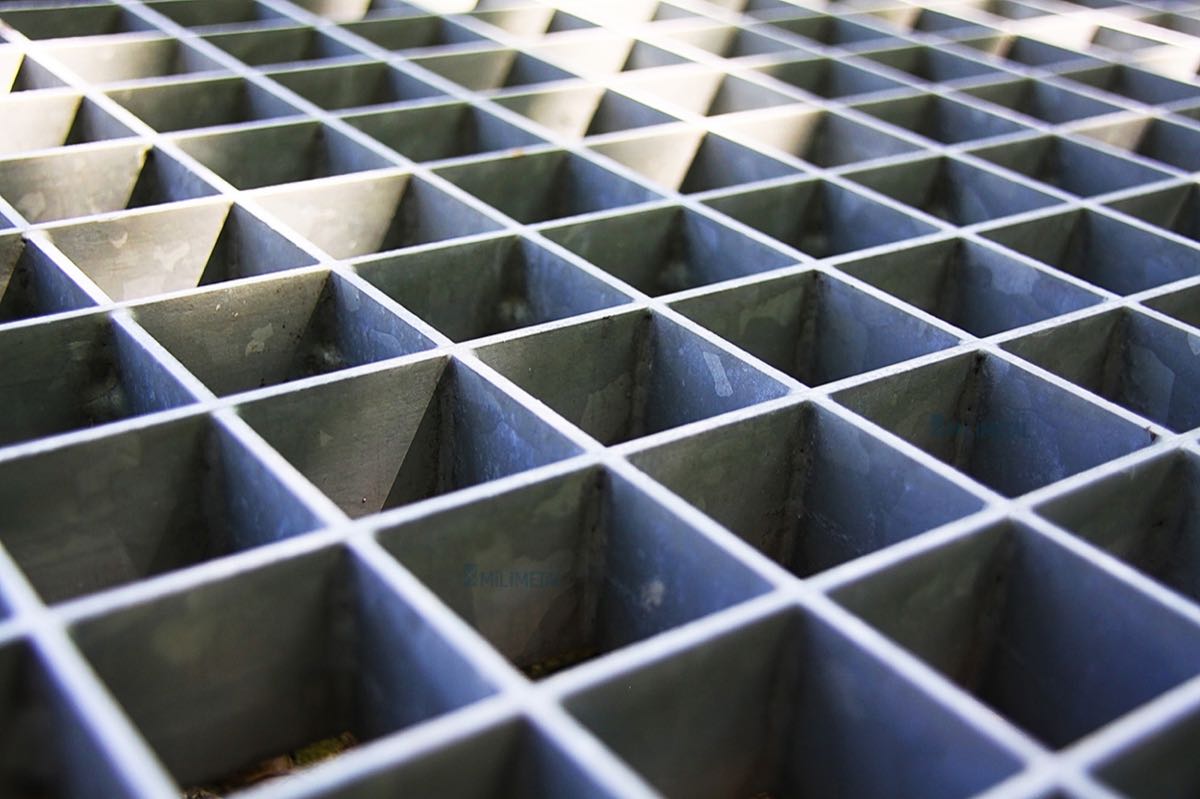
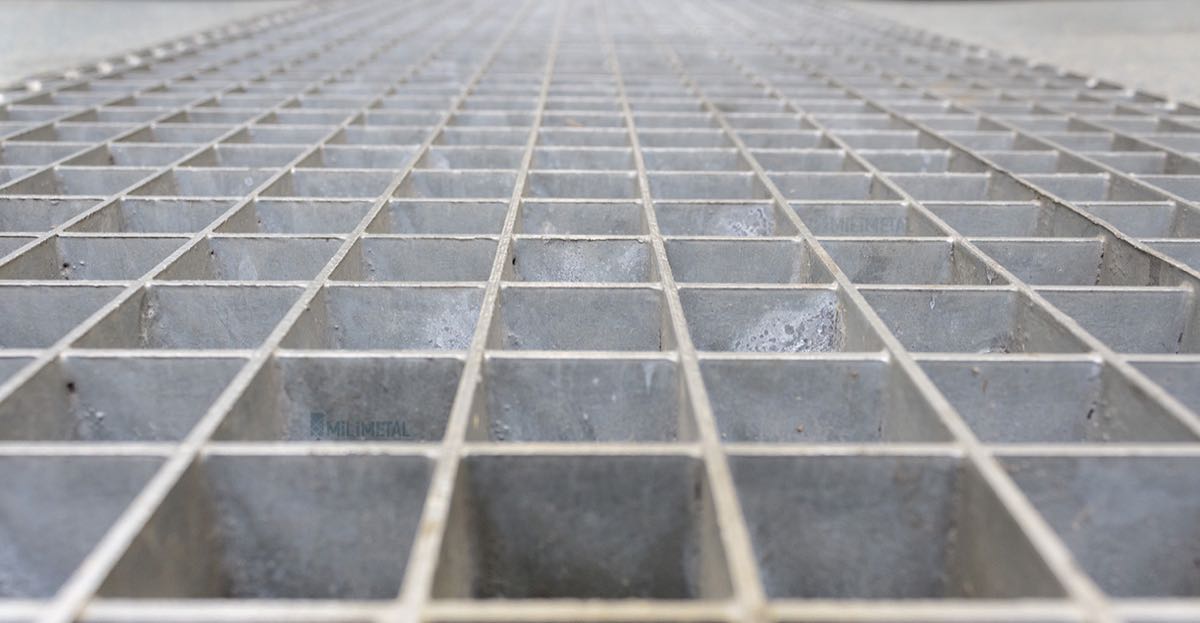
Steel grating is a product that can be used in industrial facilities for walkways, floor coverings, vehicle crossings, drainage covers and safety purposes. Basically manufactured with Heavy Type (TG), Medium Type (YG) and Light Type (NE) options to suit your project's exact needs.
Steel gratings that can be manufactured with different materials and surface coating options have a very wide range of applications, from human walkways to high-tonnage vehicle crossing roads, from warehouse racks to stair and step systems. Thanks to MiLiMETAL®'s flexible production variety, it produces solutions that are exactly suitable for the place and purpose of each project.
Standard Technical Specifications
Standard specifications for basic use of steel gratings. For non-standard applications, please refer to the Custom Steel Grating section.
General Specifications
Material
Steel (S235JR / St-37), Stainless, Aluminium
Coating
Uncoated, Hot-dip galvanized, Painted
Standards we meet
- General: EN 1090 (CE), ISO 3834-2, ISO 45001
- Steel grating: RAL GZ 638 & DIN 24537
- Stair treads: DIN 24531 -2, 3
- Hot-dip galvanizing: DIN EN ISO 1461
Technical View
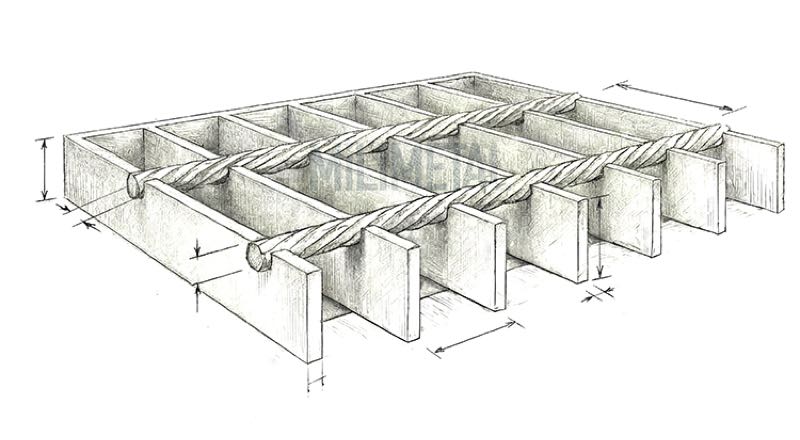
See "Standard Mesh Spacing Table" on the side
See "Standard Mesh Spacing Table" on the side
Details About Grating Selection
The purpose of the steel grating (walkway, vehicle road, or only load bearing or safety) should be determined in advance. Based on this, the grating type and thickness can be decided.
Safety FirstFor everyday human foot traffic, Light Type (NE) with 2-3mm thickness is sufficient depending on load and traffic, while in a very busy environment with work boots, the grating thickness can be increased to 4-5mm for long life. For platforms with vehicle traffic, Medium (YG) and Heavy (TG) types should be used, and in areas where multi-directional mechanical movement is expected, Heavy Type (TG) grating with thick material should be used.
EconomyAs the material thickness used in steel grating increases, naturally it will be reflected as a static load increase on the structure and also increase its cost. Conversely, when it becomes thinner, the load will decrease and the cost will decrease, but in return, the durability will also decrease. Therefore, it is important to select the material and type at the optimum point for the use of the grating.
InformationAt this point, you can always contact us for material selection and easily get information from our experts.
The gap between at least two supports on which the steel grating will stand is determined. The grating bearing bar height should be determined according to this gap measurement.
Safety FirstAssuming that the span of a standard walkway is approximately 1000mm wide, the expected load is approximately ~1000Kg distributed per m² and ~250Kg for point load. However, if we reduce the material height to 20mm, this load capacity will decrease; in continuous and heavy use, this can lead to flexing and deformation over time. It should be known that in areas where incorrect selection has been made and applied, due to this deformation and bending, the grating may become dislodged from its mounting connections over time and fail to remain fixed in place / fall, leading to unwanted dangerous situations.
EconomySteel gratings can be used in this not-recommended manner, in areas such as maintenance platforms and roads where use is very rare, consciously and within certain limits, with careful calculation to reduce load and cost. However, in these cases, it should not be forgotten that the responsibility will be on the applicator's side. On the other hand, it can be used safely in this way by supporting it with a construction from below in a way that will shorten the bearing bar span of the grating (for example from the middle of the 1000mm span). Because in such an application, the bearing span will be reduced from 1000mm to 500mm, thus increasing the load capacity of the grating. Only the middle supporting piece needs to be load-resistant.
InformationYou can always get support from our company for such calculations and selections. Also, steel gratings are generally coated with hot-dip galvanizing after manufacturing. Thus, they obtain long-term protection against external factors, but since hot-dip galvanizing coating penetrates deeply into the product during the process, material analysis on the product becomes impossible after this process. For this reason, the quality of the products used, the correctness and traceability of their quality contents, new material and documentability are important in the mentioned calculations. For this reason, manufacturers like MiLiMETAL® with product traceability, certifications and material usage commitments are of great importance in terms of the reality of product durability.
The mesh spacing of steel gratings is generally determined according to the intended use. For steel gratings used on walkways, 34/38mm or 30/100mm mesh spacings are commonly used as the most general standard to reduce shoe toe catching problems. However, this is not and should not be a standard; it is only a production preference related to the manufacturer's machines and/or molds, and to the user's needs.
Economic SuitabilityTo reduce or increase permeability, reduce static load, for safety reasons, ease of use or simply for a more economical solution, mesh spacing can be adjusted wide or narrow during the manufacturing process. In addition to the meshes in the "Standard mesh spacing table" on the side, more various mesh spacings can also be applied according to your request. Please contact MiLiMETAL® regarding this matter.
InformationFor example, while 34/38 mesh spacing is a normal choice for steel gratings to be used for walkways, 38/38mm mesh spacing, which will be both more economical and lighter, can be used for a temporary or rarely used maintenance platform. Or this mesh spacing to be applied as standard will be an unnecessary static load and cost-creating mesh spacing choice especially for rack grating manufacturing on which products will be stacked on pallets and especially for storage systems where static load is of great importance. Of course, for such systems, mesh spacings such as 40/100mm or much wider mesh spacings can also be used. However, of course, the load and traffic that the gratings will carry must also be taken into account for these openings.
InformationAs MiLiMETAL®, there may be approximately ~3mm margin of error in our grating manufacturing technique. However, since we do not manufacture in standard sizes, especially in mass production when adjusting grating dimensions, the last mesh spacings close to the frame may be more or less than expected. Therefore, when checking the mesh spacing, a gap should be selected from the middle of the product and measured.
When steel gratings are manufactured as Light Type (NE) with twist bars, they can provide sufficient anti-slip for standard use. However, since the surface will be completely flat in Medium (YG) and Heavy Type (TG) gratings, serration application is required when anti-slip is needed. The density of serrations to be opened can be adjusted slightly depending on the mesh spacings. Especially in areas of use where elements such as oil, dust, snow that can adhere to the product and form a layer are intense, serrations often need to be opened on the gratings to provide anti-slip. Serrations can be opened only on the bearing bars in Light Type (NE) gratings, and in both directions (Bearing / Cross) for Medium (YG) and Heavy Type (TG) gratings.
Safety FirstYes, opening serrations will provide anti-slip. However, due to both the structure of steel and the method of production, in some usage conditions it can also create a risk of tripping, falling or slight injury in case of contact. Therefore, the decision for surface selection should be made considering the usage style, location and conditions of the grating.
Size and Material Options (* Values given as ranges)
| A | B | C | . | D | E | F |
|---|---|---|---|---|---|---|
| MG | 330 | 05 | . | 3438 | N | 330 |
| A | Grating Type | MG: Steel Grating, MB: Stair Tread Grating | ||||||||||||||||||||
| B |
Bearing Bar Material
( Tk , Ty ) |
2-5 mm thickness and 20-50 mm height range | ||||||||||||||||||||
| C |
Cross Bar Material
( Dk , Dy ) |
For Light Type Gratings: - Ø5 - Ø8 mm twist bar For Medium and Heavy Type Gratings: - 3-5 mm thickness and 10-50 mm height |
||||||||||||||||||||
| D |
Mesh Spacing
( Dg , Tg ) |
Generally, bearing and cross bar elements can be adjusted within the 22 - 100mm range. 34/38 or 30/100 for light type, 30/30 or 33/33 mm common for medium and heavy type. For details, please refer to the table below. | ||||||||||||||||||||
This table shows the mesh spacing we commonly manufacture. Please contact us for different mesh spacing requirements in your project. |
||||||||||||||||||||||
| E | Anti-slip | Plain (N), Serrated (C), Double serrated (CC) option for YG and TG | ||||||||||||||||||||
| F |
Frame
( Cy , Ck ) |
Generally expected to be the same as the internal bearing bar material of the grating. If it is desired to be raised, material higher than the bearing bar can be used. | ||||||||||||||||||||
| Manufacturing Dimensions | Manufacturing from 5cm to 3m upon request. Dimensional suitability is determined according to span, load and material. Please contact us for detailed information. | |||||||||||||||||||||
Manufacturing Types
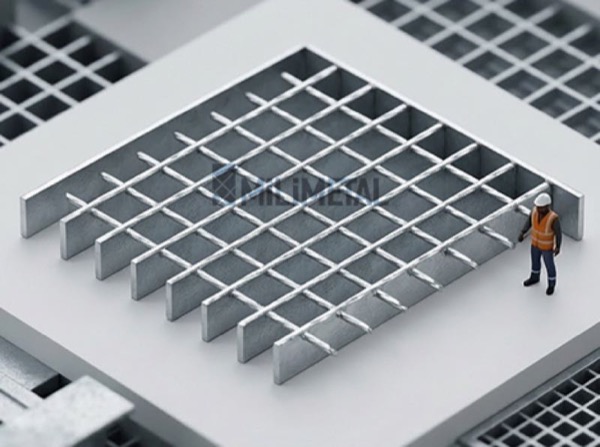
Light Type Grating (NE)
Twisted-Bar (Square Twist) Grating
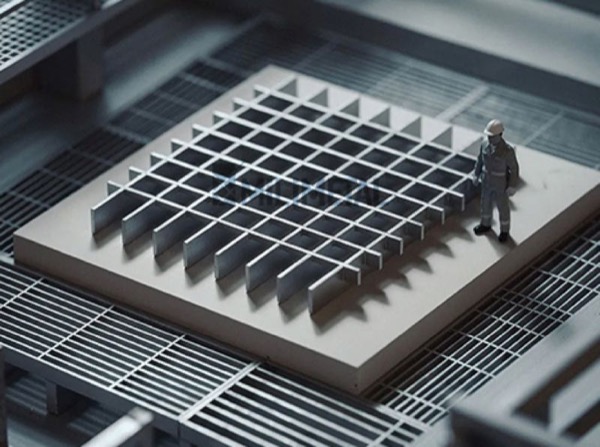
The most commonly used, light and economical type of grating where square twist bars are used as cross bars. Can be manufactured in various ways in terms of material and mesh spacing. The square twist bars used as cross bar material provide a certain degree of anti-slip. Single direction serration application can be done for more definite anti-slip.
Application Areas
Can be used in industrial walkways, racking systems and grating stairs.
Medium Type Grating (YG)
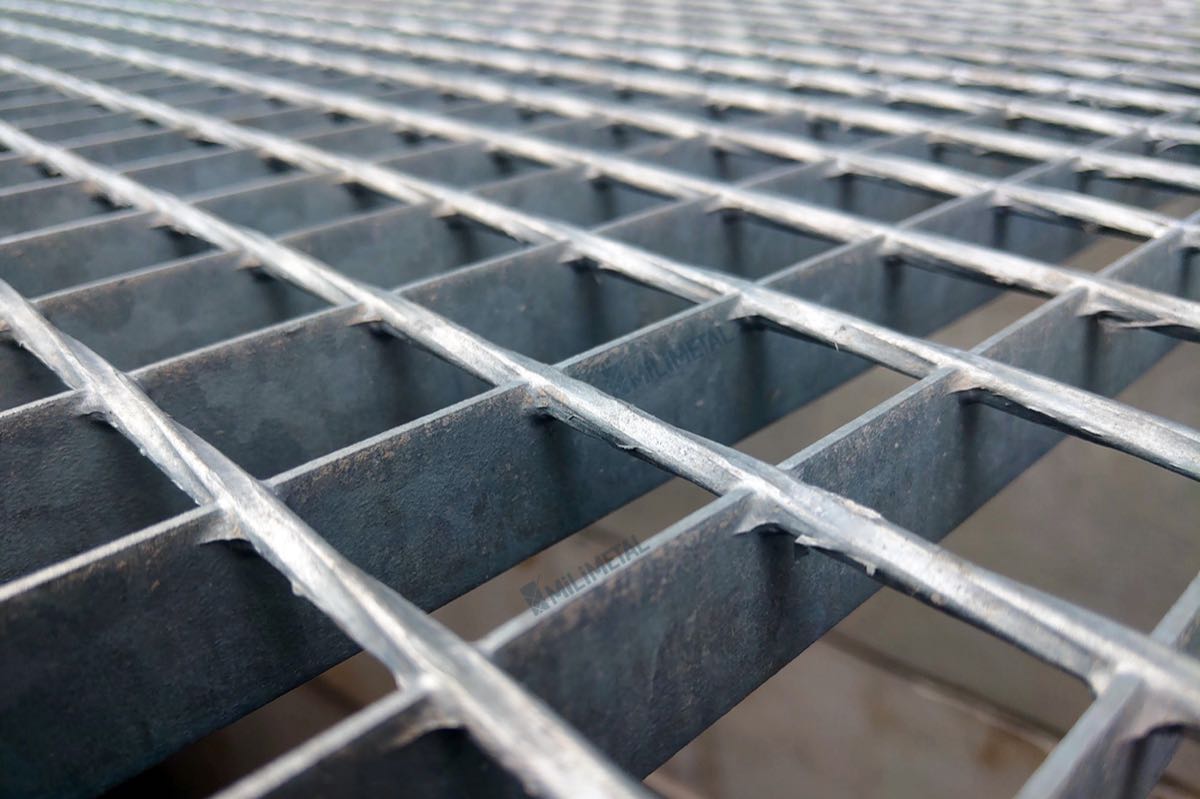
Half-Locked Grating
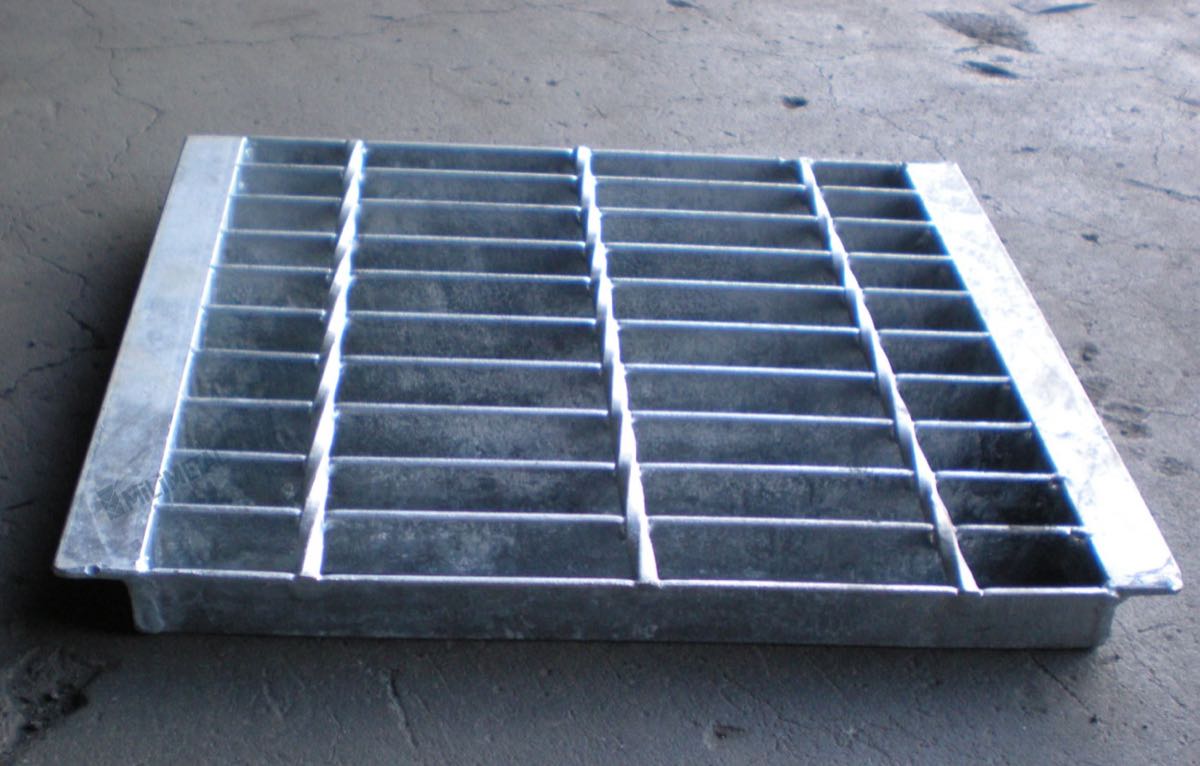
Bar strips are used as cross bars, more resistant to medium-level lateral loads and moving loads compared to Light Type gratings (NE). Lighter and more economical than Heavy Type (TG) gratings. Material and mesh spacings vary. Despite its open structure, due to the flat material surfaces, the surface can be slippery compared to Light Type. In applications requiring anti-slip, serration application can be done in single or double directions.
Application Areas
Can be used on walkways, heavy load racks and some light vehicle crossing platforms, as drainage covers.
Heavy Type Grating (TG)
Full-Locked Grating
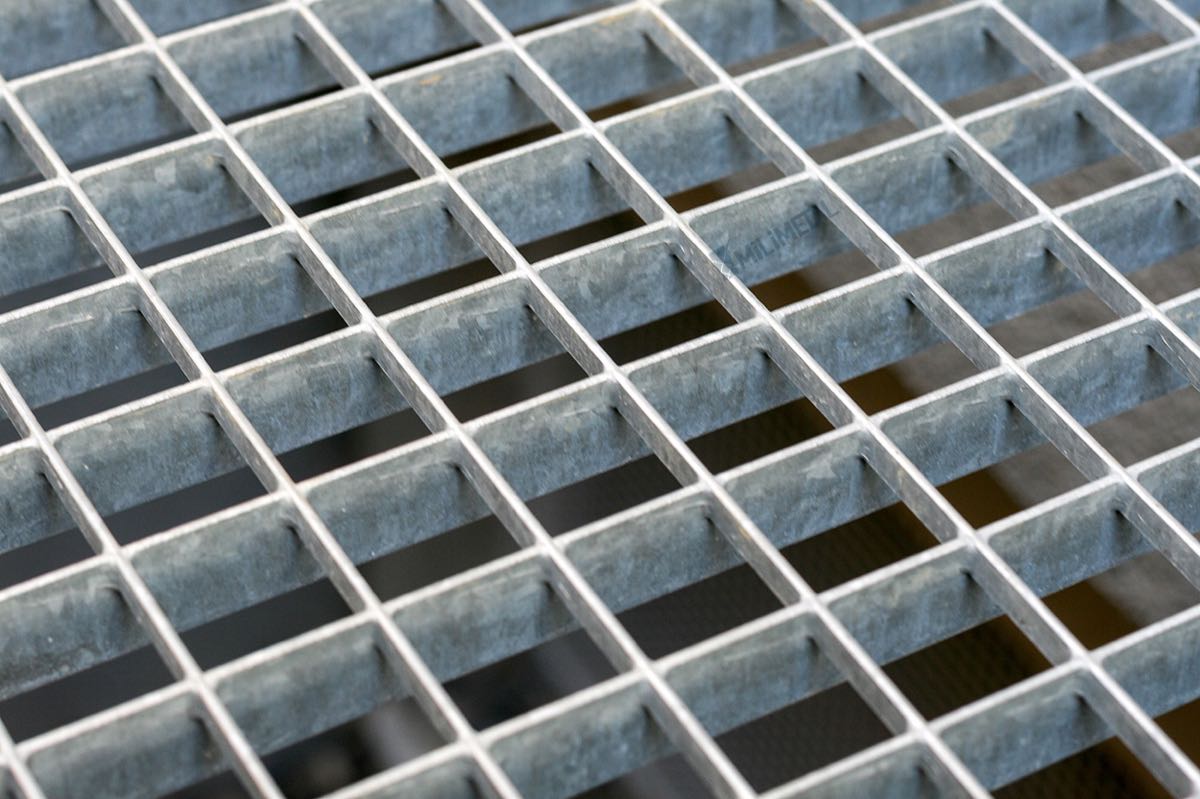
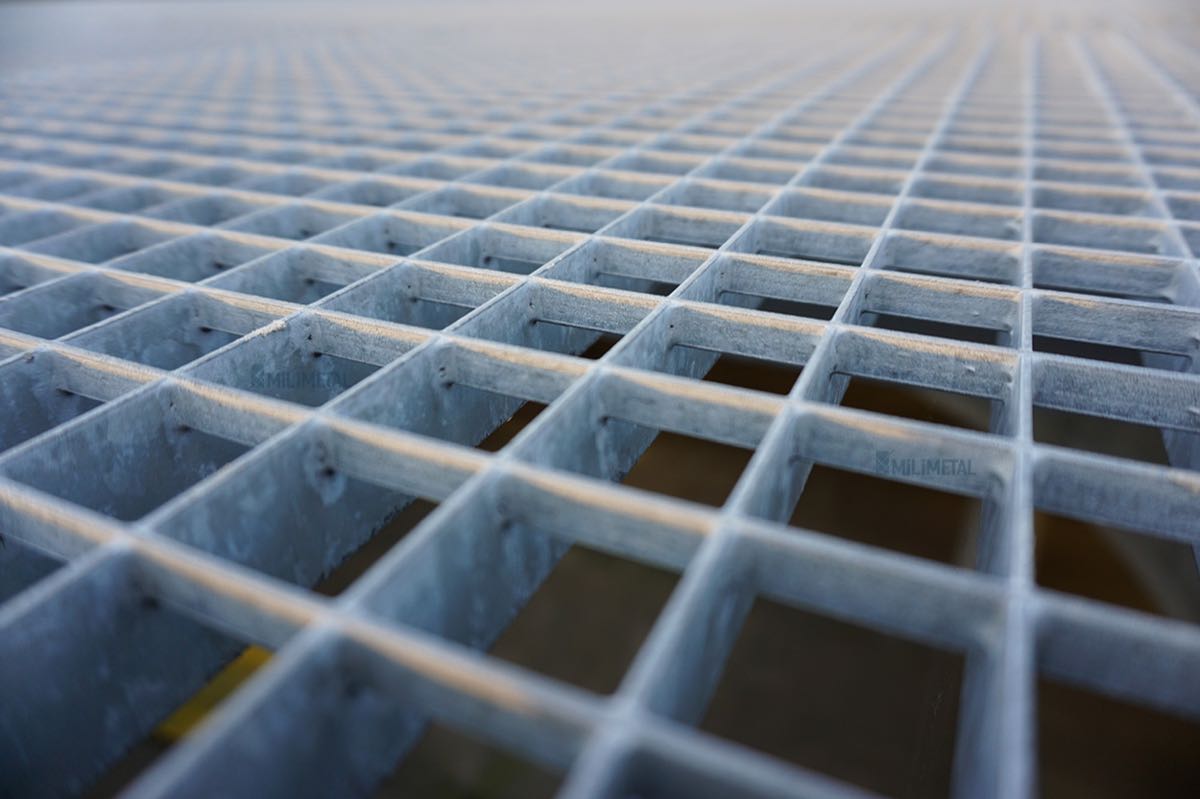
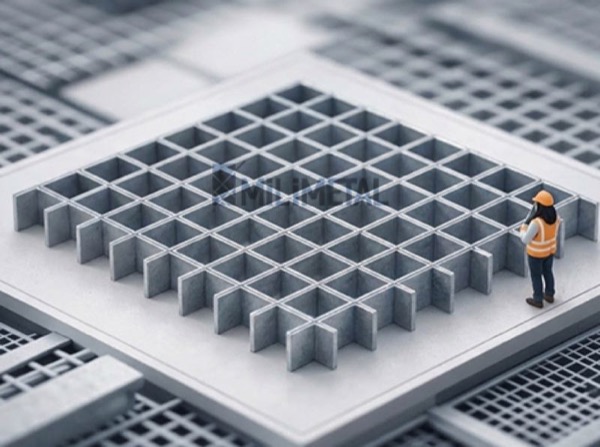
Manufactured by interlocking bars of the same height. It is the most durable type against lateral compression and mechanical movements compared to Medium Type (YG) gratings. Despite having an open structure, its flat surfaces can be slippery under heavy conditions if anti-slip serrations are not applied. In these cases, serrations can be applied in single or double directions.
Application Areas
Can be used in all walkways, mobile or stationary vehicle platforms and roads, ramps.
Application areas
Industrial facilities
Walkways
Vehicle platforms
Trench gratings
Stair treads
Balconies and terraces
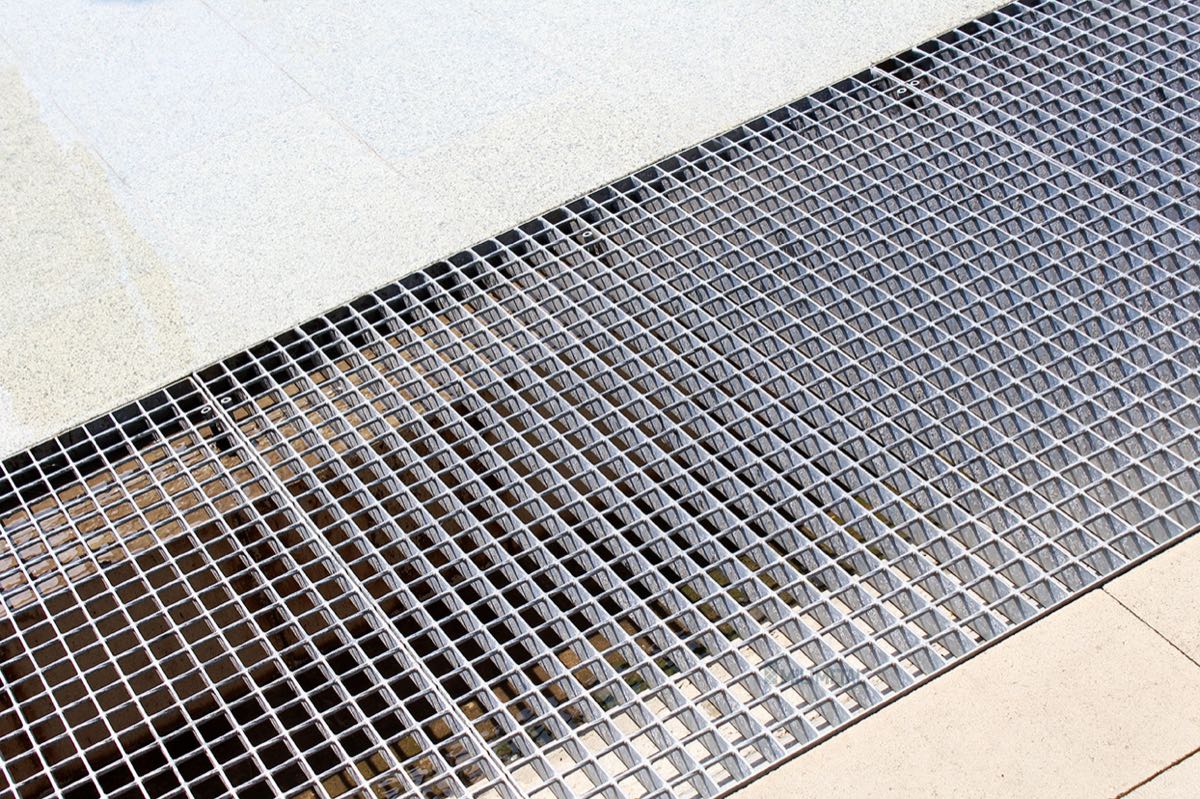
Drainage Channel Grating
Frequently Asked Questions
Since manufacturing is done on demand, we can generally deliver most small and medium projects within 1-7 business days. For high volume projects, special and specialized manufacturing, the deadline is determined according to the project.
We have a fast production option for urgent projects. Please contact us.
Request a Quote For Your Project
Get technical information and price quote for custom steel grating manufacturing for your project. Discuss with our expert team.